
Media
All posts
67 posts
In today’s fast-paced and complex battle environments, logistics is no longer just about moving supplies—it’s about sustaining combat effectiveness in the face of constant disruption. Welcome to the era of contested logistics, where traditional supply lines are vulnerable, adversarial interference is expected, and the ability to adapt quickly can determine mission success.
In today's challenging engineering environment across the Defense industrial landscape, companies rely heavily on precise modeling and detailed simulations to streamline feasibility studies, project execution, enhance accuracy, and reduce costs. A typical engineering company might utilize a robust toolkit—including numerical analysis, mechanical & thermal simulation, mechanical & electrical design, and multi-domain analysis—to guide their projects seamlessly from conception to final delivery.
An F-16 fighter jet streaks through contested airspace on a critical reconnaissance mission. Suddenly, its radar warning receiver flares to life—an enemy tracking radar has locked on. Within seconds, surface-to-air missiles are launched from a hidden battery below. But thanks to the immediate threat identification and directional awareness provided by the onboard Radar Warning Receiver (RWR), the pilot executes evasive maneuvers and deploys countermeasures, narrowly escaping the attack. This scenario underscores the indispensable role of RWR technology in ensuring mission success and pilot survivability.
Understanding RADAR technology is critical in defense applications, particularly when it comes to differentiating between active and passive phased array RADARs. Each type brings unique strengths and challenges to the field, impacting system capabilities, operational effectiveness, and overall mission success. This guide clearly outlines the fundamental differences, technical considerations, and real-world applications of active and passive phased array RADARs.
In today's rapidly evolving defense environment, technological obsolescence poses a persistent yet often overlooked threat to military preparedness. As defense systems age, critical components become unavailable, creating vulnerabilities that can undermine mission readiness. Reverse engineering, however, has emerged as a pivotal strategy for mitigating these challenges, providing military and defense agencies with a practical and cost-effective way to maintain operational readiness.
The F-16 Fighting Falcon, originally designed as the U.S. Air Force’s premier air-to-air day fighter, has undergone significant evolution over its more than forty years of service. Initially engineered for high maneuverability and rapid response, this fourth-generation aircraft introduced groundbreaking innovations such as a negative stability fly-by-wire control system, a frameless bubble canopy, and a side-mounted control stick. Its strengthened airframe and reclined ejection seat allow for high-G maneuvers, making it a formidable air superiority fighter.
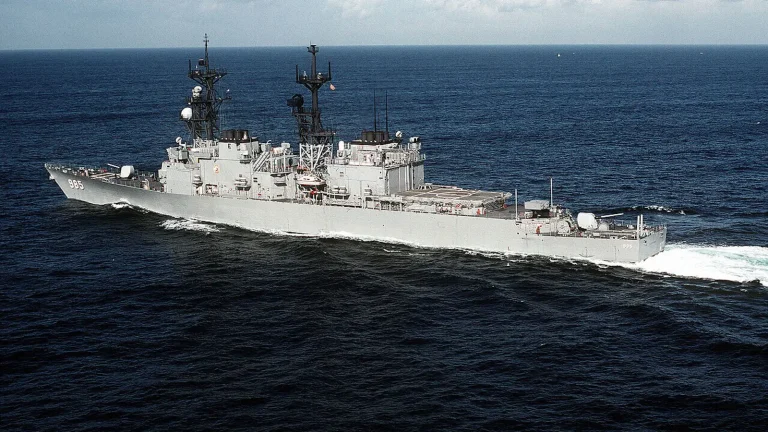
The USS Cushing, a U.S. Navy destroyer, cut through the dark waters of the open sea, its crew on high alert. A hostile missile had been detected inbound, locked onto their position with deadly precision. Within seconds, the ship’s advanced RADAR system identified the threat, triggering an immediate response from the vessel’s surface-to-air missile defense system. The crew worked seamlessly, executing their well-rehearsed protocols. A missile launched from the ship’s deck, streaking toward the incoming threat. The two projectiles met in a fiery explosion high above the ocean, neutralizing the danger before it could reach the fleet. Moments like this underscore the absolute necessity of maintaining peak operational readiness at sea—where split-second decisions and the reliability of defense systems mean the difference between success and catastrophe.
In the ever-evolving defense industry, maintaining and testing critical electronic and avionics systems is a constant challenge. As technology advances, legacy test equipment often becomes obsolete, creating significant hurdles in maintaining operational readiness. Manufacturers and military organizations must either find ways to support aging test platforms or invest in costly new systems.
Duotech Services (DSI), a recognized leader in specialized sustainment and engineering services for aerospace and defense users worldwide, was honored to welcome Congressman Chuck Edwards, U.S. Representative for the 11th District of North Carolina, at its 35,000 square foot facility in Franklin, North Carolina today.
We love this time of year, the Christmas season and all the peace, love, and joy it brings to our hearts. At the close of another year, we gratefully pause to wish you a warm and Happy Holiday season.
an Aerospace and Defense company located in Franklin, NC. Since its founding by Dan and Cheryl Rogers in 1982, our company has grown to be one of the most successful companies in the western part of North Carolina.
Marking a major milestone, Duotech’s ARGUS RWR has been sold internationally for the first time. ARGUS is a highly affordable digital threat detection system designed for a variety of platforms and applications. This solution provides calibration methods to utilize existing antennas in the F-5, F-16, C-130, and other platforms.